Foreign Minister Discusses by Phone with His Estonian Counterpart the Repercussions of the War and Warns Against Its Regional Expansion

Foreign Minister Discusses by Phone with His Estonian Counterpart the Repercussions of the War and Warns Against Its Regional Expansion
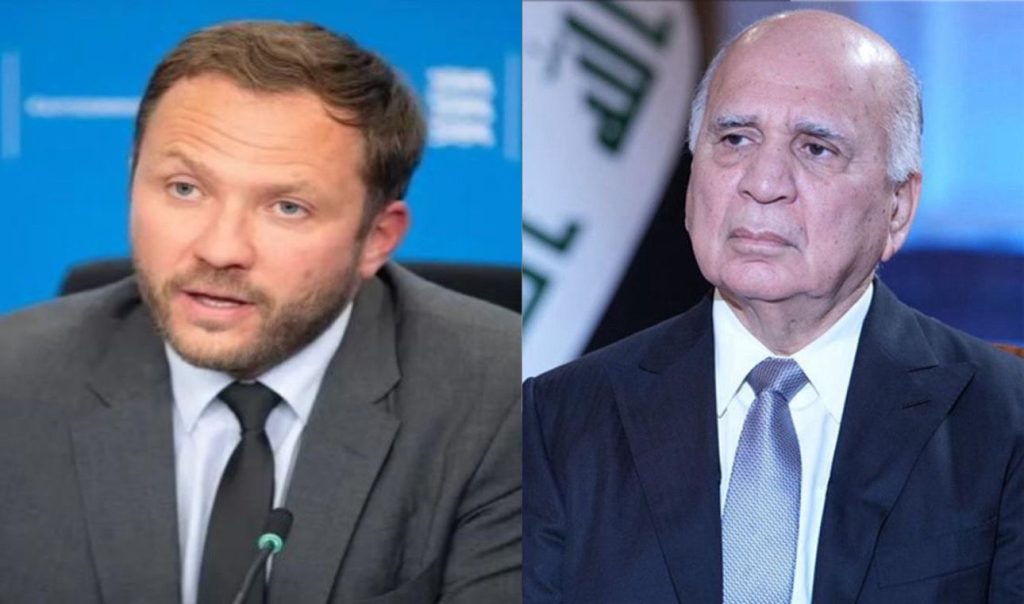
Deputy Prime Minister and Minister of Foreign Affairs of the Republic of Iraq, H.E. Mr. Fuad Hussein, received a phone call on Monday, 2 March 2026, from the Minister of Foreign Affairs of the Republic of Estonia, H.E. Mr. Margus Tsahkna, during which they discussed the developments of the war and its repercussions on Iraq and the region.
At the outset of the call, H.E. Mr. Fuad Hussein expressed his appreciation to his Estonian counterpart for the communication, outlining the Republic of Iraq’s perspective on the course of the war and stressing that its continuation serves no meaningful objectives, but rather contributes to deepening armed chaos in the region and further escalating tensions.
H.E. clarified that the Republic of Iraq is not a party to the war; however, its geographical location makes it directly affected by its repercussions and the associated military operations, pointing out that the country has become among those impacted by the conflict, indicating that the Islamic Republic of Iran continues to shell various areas in the Kurdistan Region of Iraq, particularly Erbil, while the other party to the conflict targets sites in the south and west of the country, thereby compounding security challenges.
H.E. the Foreign Minister underscored the urgent need to work toward ending the war and declaring a ceasefire, warning that continued fighting could lead to a widening of the conflict and the involvement of Gulf states, with potentially serious regional consequences.
H.E. also referred to potential economic risks to Europe, noting that the outbreak of a large-scale war in the Gulf region could result in the loss of significant quantities of oil and gas from the global market, which may drive up energy prices and create substantial complications for the global economy in general, and the European economy in particular.
During the call, both sides emphasized the importance of intensifying international efforts to contain the escalation and prevent the further expansion of the conflict.